Content Pipeline That Works: Input to Signal Without Tool Chaos

Publishing feels easy when thought moves cleanly. It feels impossible when every step adds grit. The difference isn’t talent, it’s whether you’ve built a path that ideas can follow without getting stuck.
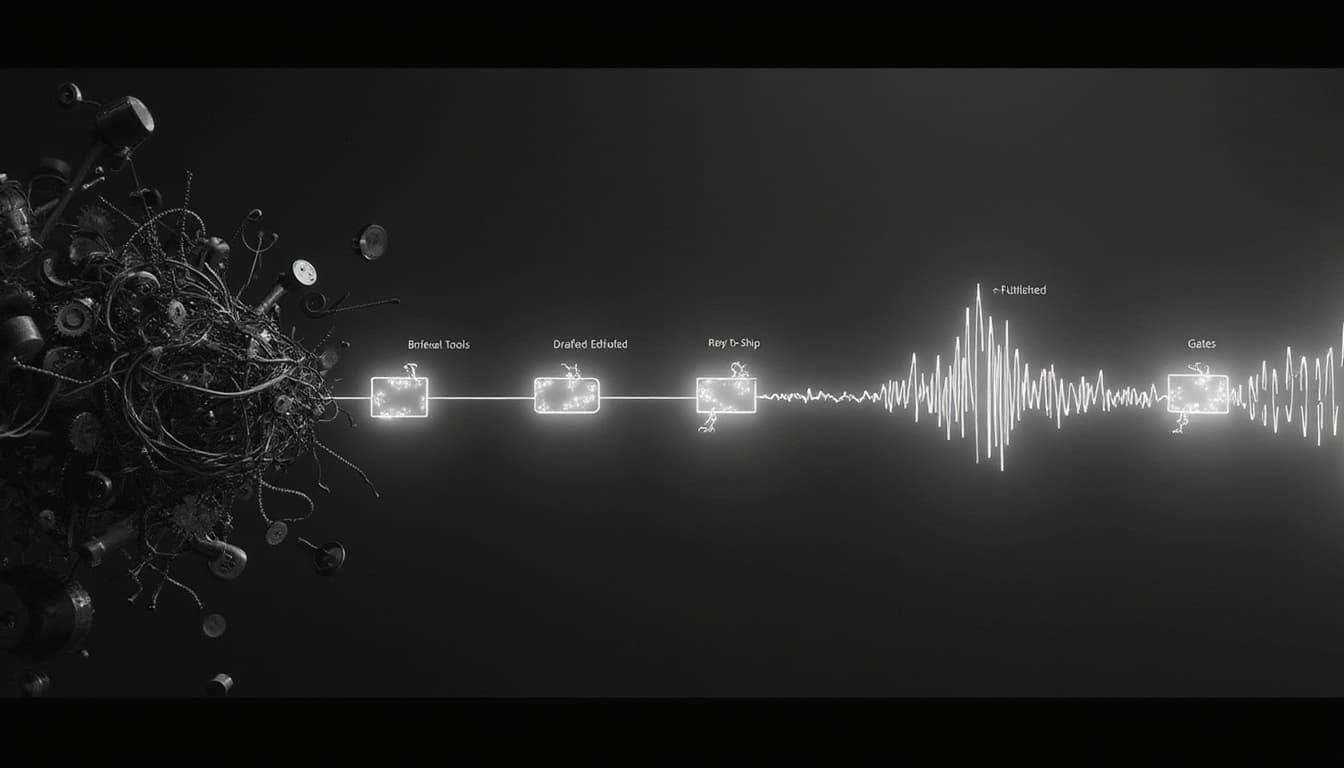
A content pipeline turns raw input into a clear public outcome by moving through five stages: input, processing, artifact, record, signal. It reduces friction by defining what each stage creates, where it lives, and how it advances.
Name the real bottleneck
I used to assume missed cadences meant “we need better ideas.” Then I mapped the week and saw where the drag lived: switching tools, unclear approvals, and editing loops. The root cause is friction, not a lack of creativity. Friction shows up as uncertain ownership, ambiguous briefs, and last‑minute “small tweaks” that reopen decisions.
One micro‑example: a draft moves from a notes app to a doc to a project board to a CMS, four contexts, three login states, zero clarity. One calendar week later, the idea is stale.
Publishing consistency is rarely a writing problem. It’s a systems problem, friction, broken flow, and ungoverned outputs.
Expose the handoffs
You probably have enough steps; you just haven’t named the handoffs. Without boundaries, work blurs and stalls. Try this quick trace: take your last published post and list where it actually changed hands. Capture tool, owner, and decision. You’ll likely find two patterns: decision drag (edits that aren’t about meaning, only preference) and tool drag (context shifts that reset attention and lose prior thinking).
A composite case I see often: a small consultancy drafts in a notes app, edits in a doc, collects assets in chat, and pastes into a CMS. Nothing is wrong individually; together, they multiply friction. We didn’t add capacity, we removed duplicate review loops. Output stabilized.
Define the content pipeline
You don’t need more steps; you need five clean ones. I call this the Cognitive Publishing Loop because it mirrors how thought becomes public.

Input captures raw ideas in one place, quotes, questions, fragments. The only rule: make it findable later. Processing imposes shape by deciding the point, audience, and stance. Light structure beats ornate templates. Artifact produces a governed output that is legible and shippable. Record stores the canonical version with metadata, date, owner, topic. This is your source of truth. Signal publishes and routes, determining where this piece goes and what it should change in the reader.
This structure creates clear handoffs between stages while maintaining the flow of ideas from conception to publication.
Turn thought into artifact
We’ve all seen a strong idea die in edits. That’s because the artifact stage is doing two jobs: make it legible and make it consistent. To make it legible, state the point in one sentence up top: “This post argues X for Y because Z.” If you can’t write that, you’re still in processing. To make it consistent, keep a simple house shape, opening/thesis, body sections, takeaway. Don’t change the shape week to week.
Micro‑example: a founder writes “We need to be more strategic.” Processing clarifies the claim to “Strategy is choosing constraints.” The artifact becomes a post with a single claim, one case, and a close. The outcome isn’t longer; it’s clearer.
Answer the pushback
Every structure invites concerns, so address them once and move on. “This will box in creativity” assumes boundaries shrink ideas, but they protect the idea from churn. The box is for process, not imagination. “This is overkill for a small team” misses that the five stages are scale‑neutral, even solo, they reduce context loss. “Focusing on signal feels clinical” confuses clarity with coldness; clarity of signal doesn’t exclude emotion, it ensures what you intend actually lands.
Keep a durable record
Here’s where consistency quietly compounds: the record. Without a record, you can’t prove what you said, when you said it, or how it evolved. Keep one canonical version with a short trace: title, date, owner, thesis, tags, and where it shipped. That’s enough to audit your presence. When someone asks, “Have we addressed this topic?” you search the record, not Slack.
Micro‑example: after six months, you notice three posts that advanced the same idea from different angles. You stitch them into a guide with minimal lift because the lineage is visible.
Let authority compound
Authority isn’t loud, it’s a steady signal that readers learn to trust. The loop makes that trust visible: each artifact fits the voice, connects to prior work, and advances a thread. Clarity attracts attention you can keep; noise attracts attention you can’t use. Consistency isn’t repetition; it’s traceable evolution.
When your record and cadence hold, you develop a structured presence. Over time, that presence does quiet work on your behalf.
Make it work next week
You don’t need a rebuild; you need a simple path that holds friction down. Start by mapping one recent piece through the five stages, writing the actual handoffs and decisions. Then collapse redundant steps, if two steps don’t change the artifact, merge them. Aim for no more than one review inside processing and one before publish.
Set one owner per stage because no owner means no movement. Choose one capture place for input and one canonical store for the record. Everything else is optional. Pre‑decide your house shape for the artifact and reuse it until it’s boring. Route the signal on a small path you can sustain, blog plus one channel. Add channels later, not sooner.
The goal isn’t more content; it’s fewer, clearer moves that make your signal legible. When the loop is in place, publishing becomes consistent because friction is removed and thought travels a clean path.