Feedback Loops and Self-Correction: How Stable Teams Adapt
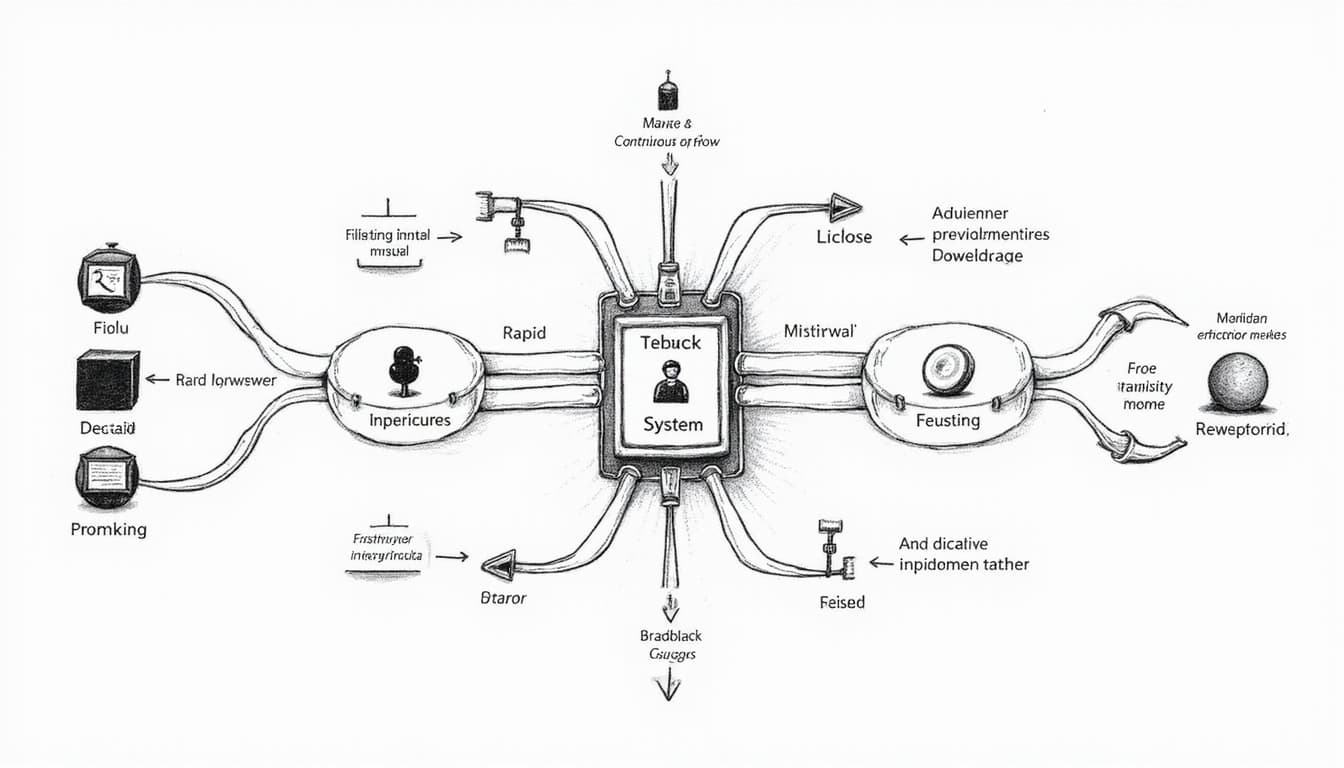
Stability isn’t stillness, it’s motion with guidance. The teams that last aren’t the ones that never err; they’re the ones that treat error as signal and correct course while moving.
Stability requires feedback loops and self-correction means a durable organization senses its reality, compares outcomes to intent, and adjusts continuously. Closed approaches decay or drift into rigidity. Adaptive approaches treat error detection as superior to certainty, aligning with Popper’s view that progress comes from finding and correcting mistakes.
Closed approaches, those that suppress input, delay review, or punish dissent, tend toward decay or authoritarian habits. The moment outcomes stop being compared to intent, drift compounds. Pursuing certainty often freezes learning; prioritizing error detection preserves clarity. We’ve all seen the project that “locks in” to avoid disruption, feels safe, then quietly drifts out of touch.
Make feedback loops explicit
A viable team behaves like a good thermostat: it senses the environment, compares reality to a target, and adjusts output. That’s not perfectionism; it’s controlled responsiveness.
Popper’s point was simple: we don’t prove truths; we eliminate errors.
In practice, that means designing your work so the smallest falsifier shows up early and safely. Don’t ask “Are we certain?” Ask “How quickly will the wrongness show up, and where will it go when it does?” Instead of a quarterly “big reveal, ” ship a slim feature behind a flag to 5% of users and compare behavior to the intended outcome. If the delta is large, adjust before broad release. For policy changes, pilot a new meeting norm in one team for two weeks, measure attendance and decision speed, then adopt or revise.
Expose the silent handoffs
The places where work passes between people are where feedback dies. The gap is invisible until you name it. I once ran a small product group that “communicated constantly” yet shipped late. The issue wasn’t effort; it was a dead zone between QA and release. Bug reports landed in a shared channel with no owner, so nothing moved. We added a daily 10-minute triage with a single on-call owner. Lead time dropped within two cycles because the loop actually closed.
Two patterns consistently kill feedback: diffuse ownership and unbounded queues. If three people can fix it, no one will, assign a single owner per class of error. If items can sit forever, they will, add service-level expectations and age alerts.
Define feedback loops and self-correction
A useful loop has three parts: sense, compare, adjust. First, instrument what matters using direct observation or simple counters, don’t wait for perfect data. Second, state the intended outcome in plain language; “fewer than 2 urgent pages per weekend” beats vague quality talk. Third, pre-decide a small correction you’ll make when the signal crosses a threshold.

Three practical thresholds anchor the pace of correction. Detection latency should surface operational issues within 7 days and strategy mistakes within 30 days. Correction cadence means committing to a small adjustment within the next cycle rather than deferring to quarter-end. Decision scope keeps adjustments local when possible, centralizing only when patterns repeat across domains.
Build correction into the work
Don’t bolt feedback on, make it part of how work flows. Set a standing comparison ritual where one 20-minute review per week compares outcomes to intent for a single focus area. Keep the artifact minimal: current target, last result, next adjustment. Pre-write your adjustment menu by listing 3-5 moves you’ll try when a metric crosses a line, like scaling back scope, rotating on-call, or adding a pre-merge checklist.
Shorten the path from signal to owner by creating a single intake for defects with automatic routing to the accountable person. No shared inboxes. Cap feedback hops at two: signal to owner to implementer. If feedback passes through more layers, it stalls. Protect the correction window by blocking a small weekly slot where teams can make changes without extra approval. The point is momentum, not ceremony.
A support team that kept missing their “respond within 4 business hours” target added a simple timer to tag any ticket at 3 hours and page the shift lead. Within two weeks, late responses dropped because the alert reached the person who could act.
Guard against overcorrection
Not all feedback is helpful; some creates thrash. If a change triggers volatility, dampen the loop by widening the averaging window or raising the threshold. Avoid swinging the wheel on every wave. In acute outages or safety issues, allow principled command, temporary tight control can stabilize the situation, but re-open the loop as soon as the spike passes.
Match mechanism to environment. In stable, low-stakes domains, lightweight checks beat heavy apparatus. Complexity has a cost; earn it. The test is whether your corrections produce steadier results over the next few cycles. If variance increases, your loop is too sensitive or mis-aimed.
Let stability emerge
Real stability is the byproduct of honest sensing and timely correction. You don’t get it by clamping down; you get it by letting the right signals through and acting on them. Treat error as information, not indictment. Keep the path from signal to owner short. Decide small, adjust fast, and let the compounding show up in your consistency. Over time, what looked like chaos resolves into legible, governed work, and the quiet authority that comes with it.